
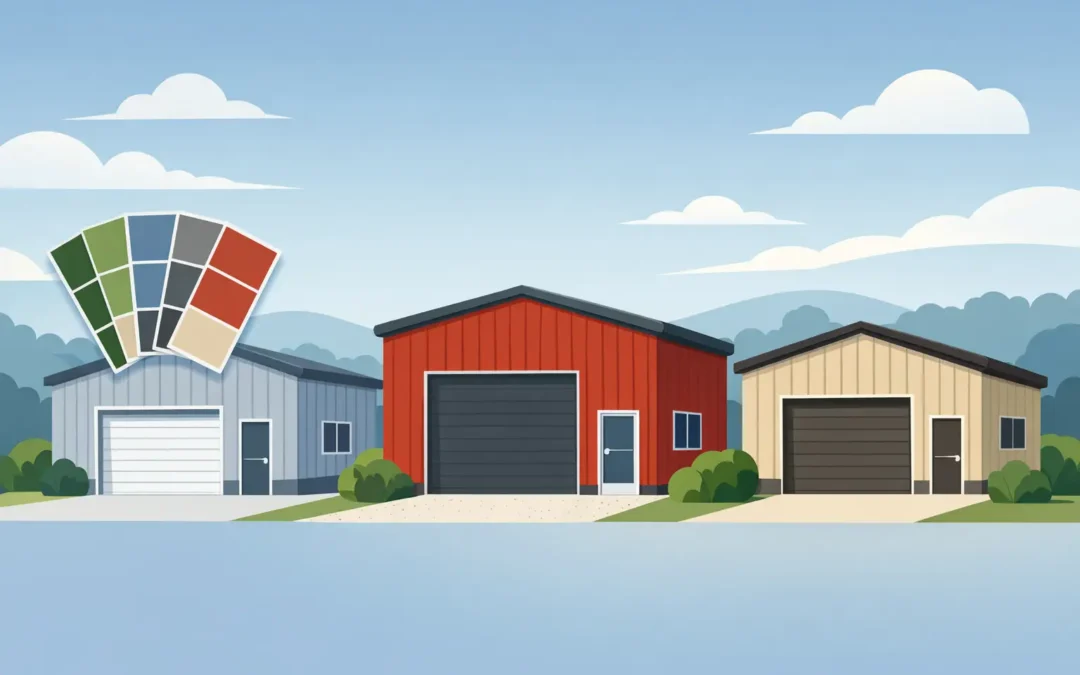
A steel building can do its job for decades, but its appearance is decided long before the first panel goes up. The right metal building exterior color options can help a garage fit a home site, make an agricultural building look intentional, or give an RV cover and workshop a clean, finished presence. In Arizona, color selection also affects how a building handles sun, dust, and the everyday reality of maintaining a property.
Color should be part of the building plan from the start. Roof, wall, trim, wainscot, doors, gutters, and even nearby structures all work together. A practical color plan makes a custom steel building feel like it belongs on the property instead of looking like an afterthought.
Metal Building Exterior Color Options for Arizona
Most pre-engineered steel buildings use factory-coated metal panels available in a range of standard colors. Exact selections vary by manufacturer, but property owners commonly have choices across neutral, earth-tone, and more traditional building colors. White, light gray, charcoal, tan, beige, brown, red, green, and blue are all common starting points.
For Arizona properties, neutrals and earth tones remain popular for a reason. They work with desert landscapes, stucco homes, masonry walls, gravel drives, and open acreage. A tan or sandstone wall color with darker brown trim can suit a horse property or equipment barn. Light gray walls with charcoal trim often work well for garages, workshops, and modern residential accessory buildings.
That does not mean every building needs to blend into the background. A deep red barn, dark blue workshop, or green storage building can add character when it matches the home, fencing, landscape, or the owner’s intended use. The goal is not to follow a trend. It is to choose colors that will still look right after years of use.
Start With the Building’s Purpose
A workshop or man cave may justify a stronger color contrast or a finish that matches the main house. A hay barn, livestock shelter, or machinery building usually benefits from a more restrained palette that hides normal use and complements the surrounding land. For RV and aircraft storage, many owners prefer clean, lighter wall colors paired with darker trim for a professional look.
Think about what will be around the building every day. A white structure near unpaved roads may show dust more quickly than a medium gray or tan building. A dark building beside a light stucco home can look sharp, but it can also dominate a small lot. Larger rural properties generally give owners more freedom to use bold contrasts without overwhelming the site.
Roof Color Matters More Than Most Owners Expect
The roof covers the largest visible surface on many metal buildings, especially when viewed from a driveway, nearby road, or elevated lot. It should be selected with both appearance and Arizona heat in mind.
Lighter roof colors generally reflect more sunlight than very dark colors. White, light gray, galvalume-style finishes, and light tan roofs are practical choices for buildings that receive full sun all day. They can be especially worth considering for workshops, garages, and enclosed spaces where interior comfort matters.
A dark roof can still be the right choice. Charcoal, dark brown, and black roofs provide strong contrast and can match existing home roofing. They also tend to hide certain marks and stains better than bright white. The trade-off is greater heat absorption. If a dark roof is important to the overall design, insulation, ventilation, roof overhangs, and door placement deserve extra attention.
A good rule is to look at the main residence first. Matching the roof exactly is not always necessary, but using a related tone creates a more connected property. For example, a home with dark gray shingles may pair well with a charcoal metal roof and warm gray or tan walls.
Use Wall and Trim Contrast With a Purpose
Trim is where a metal building gains definition. Corner trim, eave trim, rake trim, base trim, framed openings, and wainscot can all create contrast without making the building look busy.
For a straightforward, low-maintenance look, choose wall and trim colors that are close in value, such as light gray walls with medium gray trim or tan walls with brown trim. This approach works well for barns, storage buildings, and structures set farther back on a property.
For more visual impact, pair lighter walls with dark trim. White or light gray walls with charcoal trim are popular because they look clean and work with many architectural styles. Tan walls with dark bronze trim offer a warmer option that fits Arizona’s natural colors. The contrast also helps define overhead doors, walk doors, and rooflines.
Wainscot panels are useful on buildings that will see regular traffic, mud, landscaping work, livestock activity, or equipment movement. A darker wainscot along the lower portion of the walls can help hide scuffs and dust while breaking up a large wall surface. On a garage or shop, it can also tie in a darker roof or door color.
Consider Dust, Fading, and Long-Term Maintenance
Arizona sun is hard on exterior materials. Quality factory-applied paint systems are designed to resist fading, chalking, and weathering, but no finish is completely maintenance-free. Color choice can make normal aging and cleanup more or less noticeable.
Very bright white shows dirt, irrigation stains, and desert dust sooner than many mid-tone colors. Black and very dark finishes can show dust, water spotting, and scratches. Medium gray, beige, taupe, bronze, and earth-tone colors are often forgiving choices for buildings on rural roads, construction sites, and active properties.
Ask about the paint system and warranty, not just the color card. Long-term paint warranties can extend up to 30 years on qualifying finishes, though coverage and terms vary by manufacturer. A dependable building plan accounts for the panel finish, local exposure, roof slope, drainage, and how the owner will use the structure.
Simple upkeep helps any color last longer. Rinse off dust as needed, keep vegetation and stored materials away from wall panels, and address scratched coatings before exposed metal has a chance to deteriorate. Proper gutters and drainage also reduce staining along walls and at the base of the building.
Match the Building to the Property, Not Just a Sample Chip
A small paint sample can look very different once it covers a 40-foot wall under Arizona sunlight. Before finalizing a color package, view larger panel samples outdoors if possible. Look at them in direct sun, shade, and late-afternoon light. Colors can appear lighter, warmer, or more intense depending on the time of day and the surrounding landscape.
Also consider permanent features that will not change easily: house roofing, stucco color, fencing, block walls, driveways, landscape rock, and nearby outbuildings. Matching every element is rarely necessary. Coordinating two or three key tones is usually enough.
For example, a residential garage may use wall panels that relate to the home’s stucco, a roof that relates to the home’s shingles, and trim that matches window frames or garage doors. A rural barn may use a neutral roof, earth-tone walls, and darker lower panels that are practical around animals and equipment.
Do HOA Rules or Local Requirements Apply?
If the building is located in a planned community, check HOA design requirements before ordering panels. Some communities limit roof colors, require certain earth tones, or require a building to match the residence. Rural areas may have fewer restrictions, but it is still wise to verify local requirements and site conditions early in the planning process.
This is one reason custom planning matters. Choosing colors before engineering, ordering, and erection helps prevent delays and ensures the finished building supports the property as a whole.
Desperado Construction Group helps Arizona property owners plan custom steel buildings around real needs, from exterior colors and panel styles to doors, layout, and site conditions. Choose a color package that works hard for the building, suits the land, and still looks right when you pull into the property years from now.